Lessons From an Internal Cast & Crew Screening
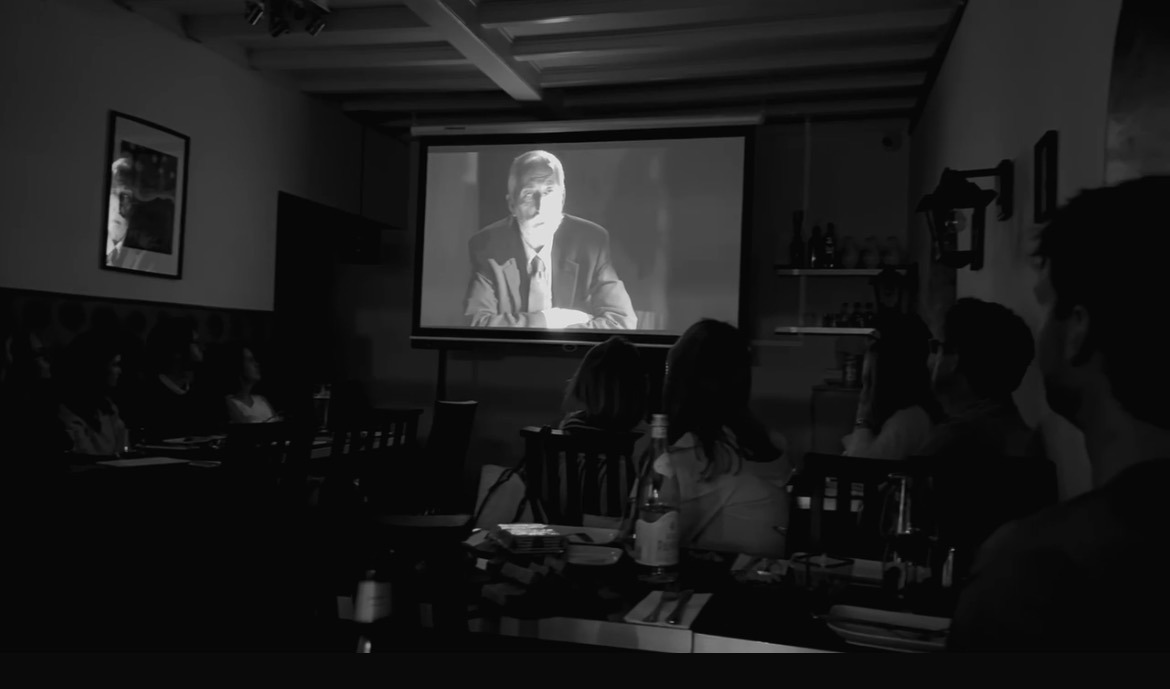
At the beginning of July, the cast and crew behind One Last Case, Detective Straat gathered at a restaurant in The Hague for an internal screening.
The screening took place at an Italian restaurant—many of the cast, crew, and guests were, in fact, Italian. Conversations were bouncing across the room, people were greeting each other loudly across the tables, and the scent of Italian spices filled the air. The Italian energy was so strong that at some point, I forgot I was in The Hague and started feeling like I was in a restaurant at the Mediterranean coast instead.
That aside, it was amazing to watch the actors react to seeing themselves in the film for the first time. You could absolutely see a mix of excitement and self-consciousness on their faces. Their reactions alone made the evening worth it.
But I want to focus this article on the lessons I learned from the screening.
I contributed to this project as a script reviewer and cinematographer. As a script reviewer, I joined the writing crew to help review the final versions of the script—give feedback, propose changes, and make edits where necessary. As a cinematographer, I got to operate the camera for a good number of scenes.
Here’s one important lesson the screening taught me for each of these contributions.
What Was My Takeaway as a Script Reviewer?
Audience feedback.
This was the first time I saw the finished film myself. Hearing the audience laugh at the lines that made it into the final cut was definitely satisfying.
Writing is often a solitary process. You spend a lot of time imagining how a line will sound or how a joke will land. But then you put it in front of an audience and discover that it doesn’t land at all or that they react to lines you didn’t even consider interesting. That’s the value of an internal screening.
It reminded me that audience testing should happen much earlier in the process. A line changes when an actor brings it to life, of course, although you can still read it aloud or perform it for friends and family to get an initial feel for the pacing and tone.
And as a Cinematographer?
Learning from mistakes.
And there were, for sure, many.
Sometimes I didn’t focus properly.
Sometimes I framed an actor poorly.
Sometimes there was background clutter that I should have spotted before pressing the record button.
Luckily, some of the mistakes were fixed in post-production. Others will have to serve as lessons to keep in mind for the next project.
Final Thoughts
The screening was a great way to celebrate everyone's work. Surrounded by good food, loud conversations, and the Italian energy in the room, it felt like the perfect setting to bring this chapter of the project to a close.
Filmmaking, like any craft, is one that you refine through experience and continuous practice. Every part of the process teaches you something, and now it's time to take those lessons into the next project.
Hopefully, with fewer focus misses.
Post a comment