Midsommar (2019)
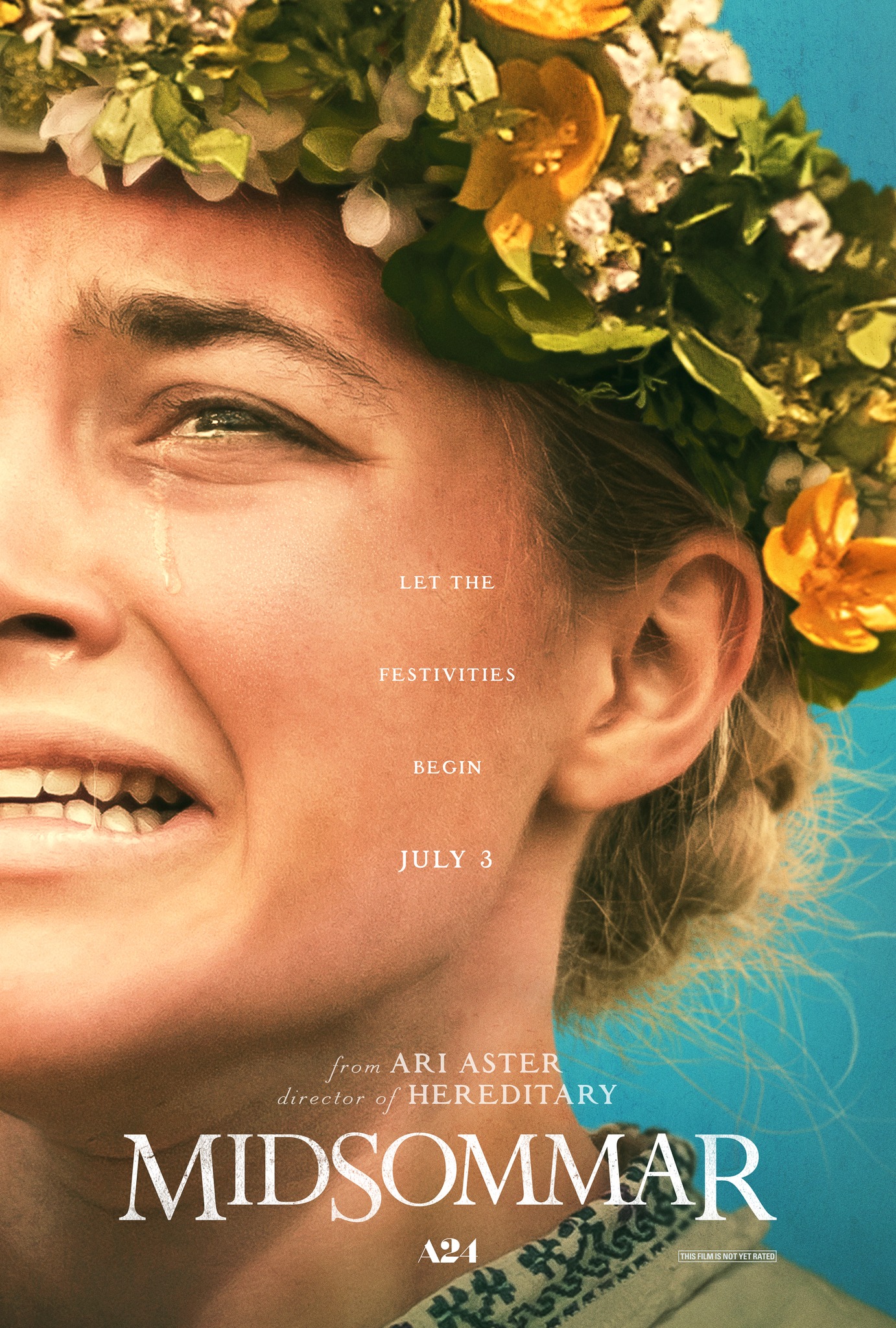
Midsommar (2019) is a folk horror film directed and written by Ari Aster. It follows the relationship of a couple who travel to a secluded, pagan commune in Sweden to celebrate the Midsummer festival.
At its heart, this story is about the dissolution of a relationship and explores how insecurities can sustain unhealthy relationships. The story puts Dani (Florence Pugh) and Christian (Jack Reynor) through a series of unsettling events that expose the weaknesses in their relationship, revealing that their insecurities had become the strongest force keeping them together.
The film has been acclaimed for its unique aesthetic choices, like being filmed in broad daylight to evoke the feeling of the midnight sun of Northern Sweden—quite a contrast to the traditional darkness associated with horror—but has also been criticized for its portrayal of pagan rituals, human sacrifice, and overall violence.
In all honesty, it took a while for the script itself to grab me. Much of the first act relies heavily on exposition, explaining the Hårgans’ traditions and folklore. Some of these moments were later removed from the final film, which helped improve the pacing. However, despite these issues, I appreciated how the script handled its central theme, which I believe was executed masterfully.
That said, let’s dive in. I’ll focus on three things that we can learn from this script, especially when it comes to analyzing how it handled its central theme —the dissolution of a relationship and the dangers of unresolved emotional dependency.
1. The External Plot Is Designed Around Dani’s Emotional Arc
When you read this script with the central theme in mind, the dissolution of a relationship, it’s clear that everything in the story is designed to challenge or reinforce this theme through Dani and Christian's experience. The couple's internal, emotional plot creates the spine of the script, while the external plot involving the Hårgans influences it.
I broke down how these two plots intertwine throughout the film.
Opening Image
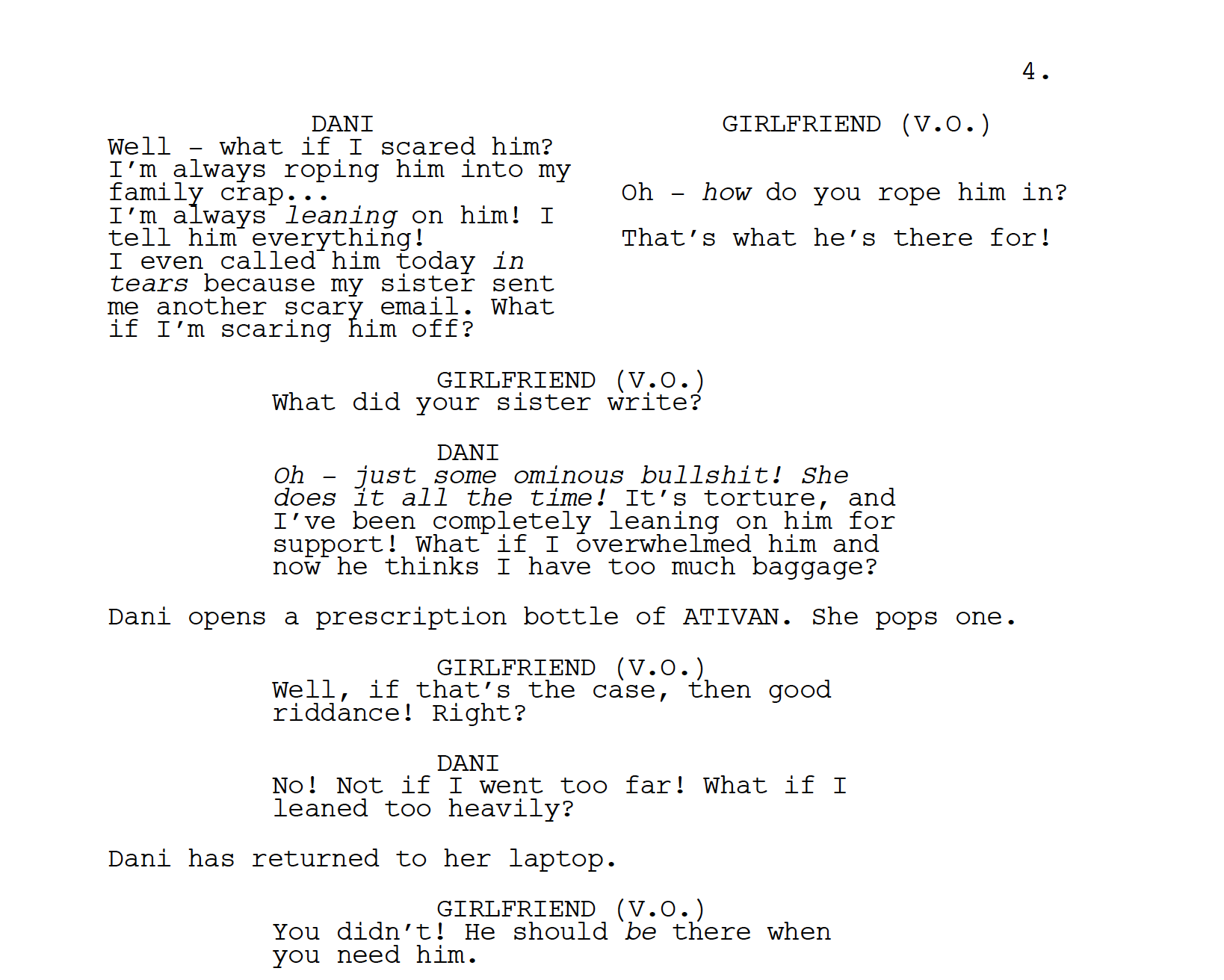
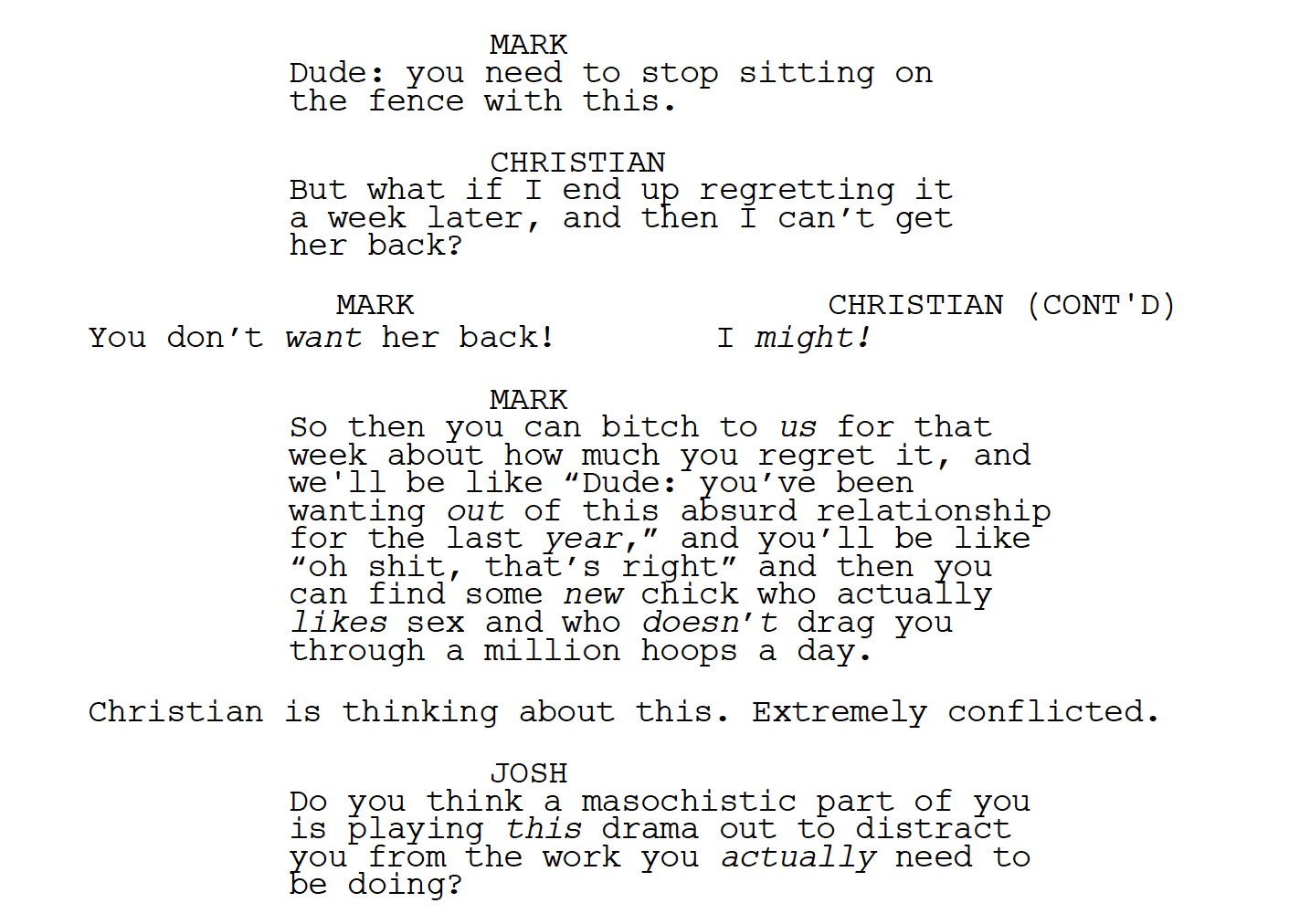
The opening image establishes Dani and Christian's insecurities, as well as their relationship dynamic. Dani is scared of pushing Christian away; Christian is scared that he might regret leaving Dani and want her back. Neither of them feels comfortable in the relationship. Most importantly, we learn that Dani is afraid of abandonment.
Aster parallels their perspectives on the relationship in the first ten pages of the script through their phone call and their individual conversations with their friends.
Below are script excerpts showing Dani and Christian' conversations with their friends, which highlight their insecurities.
Inciting Incident
From the relationship POV, the death of Dani’s family (external plot) creates the psychological terrain for her later destabilization (emotional plot) as she loses her family and locks the couple into a relationship built around emotional dependency. At this point, Dani becomes emotionally dependent on Christian, while Christian can no longer easily leave her, aware that doing so would break her even further.
Act I
Christian invites Dani to join him on the trip to Sweden. His hesitancy to invite her echoes his behavior from the opening scenes. Dani agrees to join because she doesn’t have anywhere else to be, but also because she would lose the emotional anchor Christian has become.
First Plot Point
The Elders commit suicide through the Ättestupa ceremony (external plot). Dani and the other visitors realize that the idyllic Swedish community they expected to visit is far from idyllic.
This is the moment when Dani’s trauma is triggered (emotional plot). She is in shock, experiences flashbacks of her parents and sister dying, but eventually suppresses them to maintain stability.
The ceremony scene is included below. It does contain graphic content.
First Half of Act II
The group of visitors investigates increasingly disturbing rituals and notices that members are starting to disappear (external plot).
Among all this, however, Dani is getting to know the Hårgans better. She fits into their rituals eerily well and experiences, for the first time, empathy and support from others, which is something very different from what Christian has been showing her until now (emotional plot).
Midpoint
Dani wins the May Queen competition (external plot). She is now symbolically accepted into the community.
Emotionally, this marks a turning point for Dani (emotional plot). Throughout her relationship with Christian, she has been feeling isolated and unsupported. And now, among the Hårgans, she finally finds a sense of belonging and emotional validation, however twisted it may seem from the viewer’s POV. For Dani, their acceptance fills the void left by the loss of her family and the instability of her relationship, so she becomes increasingly attached to their community.
Below's the May Queen scene.
Second Half of Act II
The remaining outsiders are trapped. In the meantime, Christian is manipulated into mating with Maja (Isabelle Grill) (external plot). For Dani, this is another confirmation that her relationship with Christian is already falling apart (emotional plot). Her last emotional ties to her old life begin to collapse. The Hårgans become the only community where she feels seen and accepted.
Crisis
Dani witnesses Christian’s infidelity and breaks down (external plot). But this time, the community weeps with her. The Hårgan women mirror her pain instead of dismissing it. This gives her the emotional support she has been missing throughout her relationship (emotional plot). In this moment, Dani experiences the connection and validation she has been searching for.
Climax
As the May Queen, Dani gets to choose the final sacrifice for the Midsummer celebration: Christian or a villager (external plot). She selects Christian, which symbolizes her choosing her new family, the Hårgans, over her old relationship (emotional plot).
Resolution
The temple burns with the victims inside it (external plot). Dani goes through several emotions before smiling. Whether liberated or indoctrinated (or both), she has found a sense of belonging (emotional plot).
2. Dani’s Tragic Character Arc
Dani’s character arc is the focus of the movie. It’s tragic in its portrayal of unhealed trauma and in showing us how it can push someone into co-dependent or toxic relationship patterns.
As shown earlier, our first glimpse of Dani is through her insecurities. She reaches out to Christian for reassurance, and we learn that she is afraid of being a burden to him. Even before her family’s death, Dani is already someone who struggles with the fear of being abandoned.
After the death of her family, this fear becomes overwhelming. She develops a co-dependent relationship pattern with Christian, where she relies on him as her emotional crutch. He becomes the person she turns to for stability, even though he is incapable of giving her the emotional support she needs.
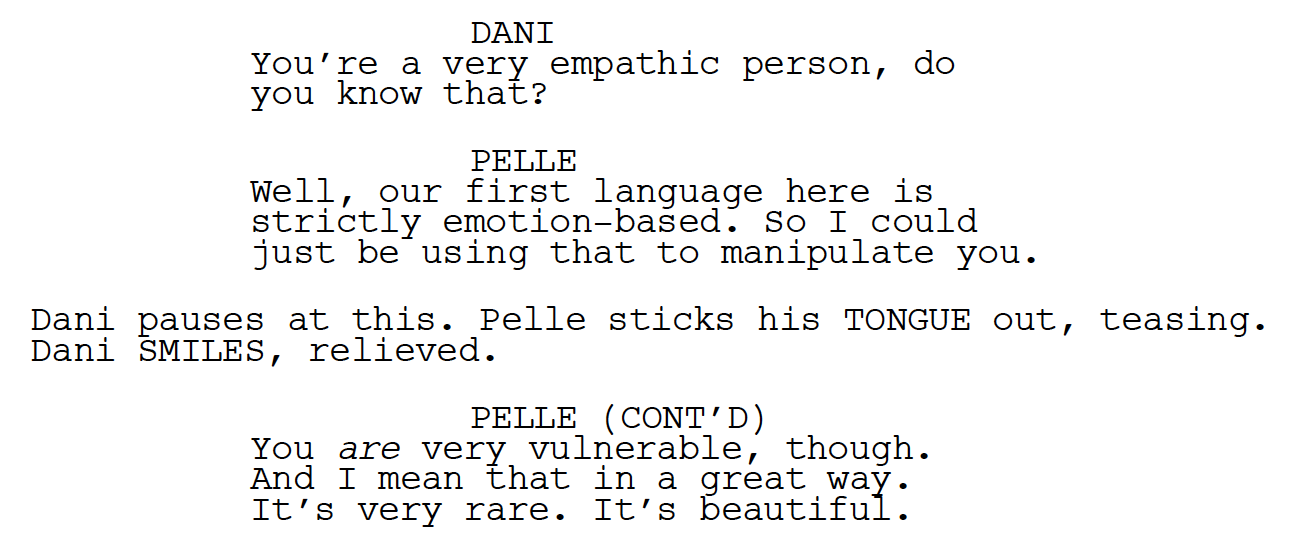
Once in Sweden, the Hårgans have an uncanny ability to manipulate her because of her emotional sensitivity. Pelle mentions this even before they fly to Sweden, but the following lines almost midway through the film show it even more clearly.
Later, when Dani discovers that Christian had intercourse with Maja, it breaks her even further.
The betrayal reinforces Dani’s fear that the people she loves will leave her when she is at her most vulnerable. The Hårgans’ response to this trauma shows Dani that there is a community that acknowledges her feelings and allows her to finally express her grief while receiving emotional support.
On the surface—sure, this sounds comforting. But it’s tragic because Dani never actually heals from her insecurities or the loss of her family. Instead, she transfers her emotional dependency onto a new, toxic family that gives her the validation she has always wanted.
This is why the final scene, where Dani smiles after everything she went through—an incredibly complex scene to act given the emotional weight—feels so tragic. She has found a place where she feels understood, but that sense of belonging comes from a community that has exploited her pain. Her smile represents the painful end of her arc: Dani finally feels like she belongs, but only after losing herself.
Below's a clip of the final scene.
3. Circularity
A final point about the circularity of the film, which I thought was really well done.
At the beginning, we meet Dani wailing on her own, although she is in Christian’s arms. He seems almost distant, somewhere else, while she is in pain.
At the end of the movie, we see her wailing hysterically with the Hårgan women, creating a complete contrast to her suffering in Christian's arms at the beginning.
This circularity is tragic because it shows that Dani has replaced one emotional crutch with another. The Hårgans provide the empathy and validation she was missing, but they do so within a community responsible for violence and the deaths of her friends.
Takeaways
Midsommar is a great example of how storytelling tools can work together to strengthen a narrative. The external plot reinforces Dani’s emotional journey and makes each event feel connected to the larger themes of grief and dependency/belonging.
What I find most effective about the film is how its structure and Dani's character arc work toward the same emotional goal. Dani’s journey gives meaning to the events around her, while the circularity of the story show us how much has changed (or hasn't) by the end.
For me, the biggest takeaway is that when the different elements of a story are aligned around a central idea, even the smallest choices can carry much more emotional weight.
Post a comment