Nosferatu (2024)
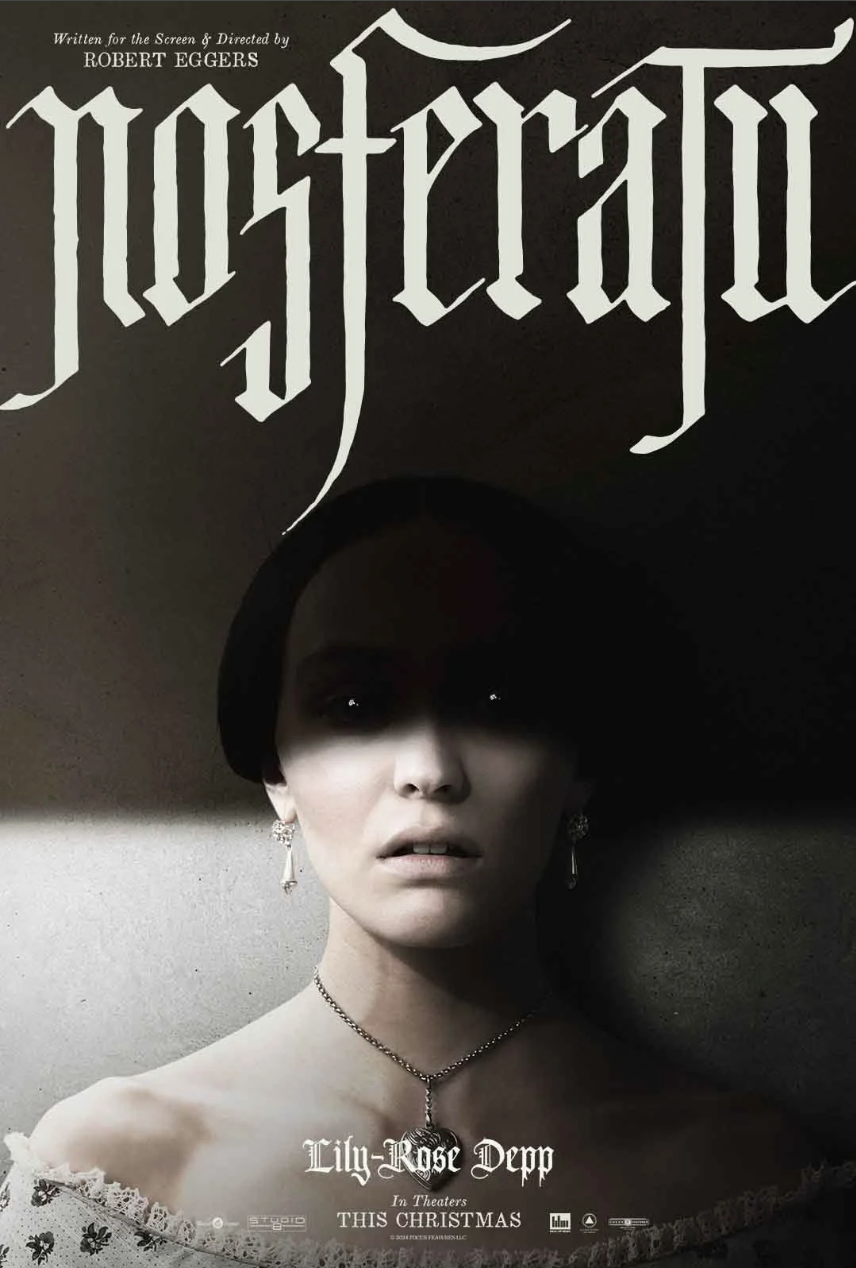
Nosferatu is a gothic horror film directed by Robert Eggers. The story is based on Nosferatu: A Symphony of Horror (1922), the unauthorized adaptation of Dracula (1897) written by Bram Stoker. Like previous versions, the script blends gothic horror with themes of desire, fear, death, repression, and the unknown.
If you've read any of my previous writing, you'll know I often argue that many modern horror films neglect their themes in favor of shock value. For example, in The Conjuring 2 the investigation and emotional stakes often take a backseat to repeated set-piece hauntings and exorcism escalation.
I appreciate that Nosferatu keeps building on its themes scene after scene instead. The horror feels more connected to the characters, their fears, and how they see the world. For me, that has more impact than horror that prioritizes gore or jump scares.
Here are three things the script does really well in that regard.
1. Foreshadowing
One of the tools the script uses a lot is foreshadowing. From early on, the screenplay prepares the audience for tragedy and supernatural horror long before it fully arrives.
A good example is Harding’s (Aaron Taylor-Johnson) daughters (Adéla Hesová and Milena Konstantinova) repeatedly asking their mother (Anna Corrin) about monsters under the bed. On the surface, these moments seem like ordinary childhood fears. But in hindsight, they become unsettling because they anticipate the family’s eventual fate.
Here's the scene.
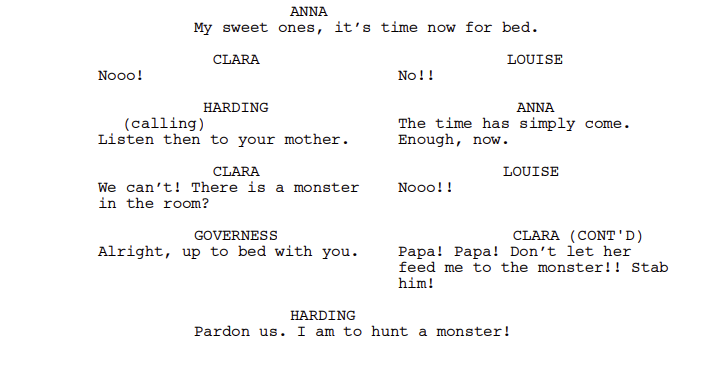
The script uses these scenes to establish a key idea: evil is sensed emotionally before it is understood rationally.
This technique works because the screenplay never treats the supernatural as something that appears out of the blue. Instead, horror arrives slowly. The audience feels that something is wrong way before the characters fully acknowledge it.
The foreshadowing also strengthens the gothic tone. The world feels haunted from the beginning, even in everyday domestic scenes. That sense of dread keeps the tension alive throughout the story.
2. Characters as Ideas
Another strength of the script is how its characters represent different ways of understanding the world. Rather than simply serving the plot, each character embodies a particular philosophy or mindset, and much of the drama comes from the clash between them.
Ellen: Intuition and the Metaphysical
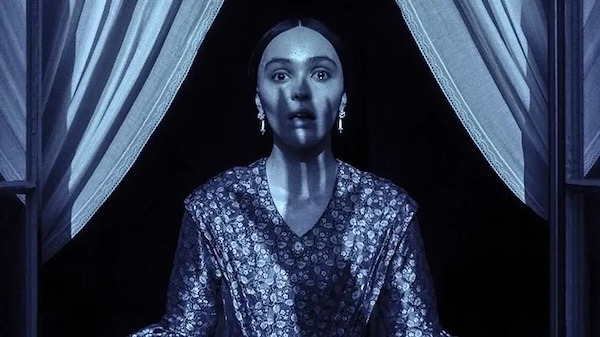
Ellen Hutter (Lily-Rose Depp) represents intuition, emotion, spirituality, and the unseen world. She feels danger before others recognize it. Her connection to Orlok (Bill Skarsgård) is psychological, emotional, spiritual, and almost cosmic.
The script positions her as someone sensitive to forces beyond rational explanation. While other characters search for logical answers, Ellen understands that some truths can only be felt.
Her worldview is supported by Von Franz, who recognizes the supernatural nature of the threat and validates Ellen’s experiences instead of dismissing them.
The short exchange below captures how Von Franz sees Ellen, and how she embodies the metaphysical.
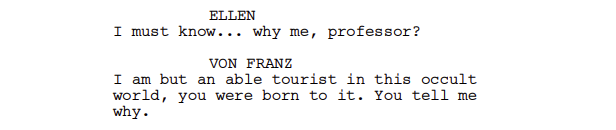
Here's the full scene.
Harding: Rationalism
Harding stands on the opposite side. He represents hard rationalism and skepticism. He refuses to believe in supernatural explanations, even as evidence begins piling up around him.
This makes him an important contrast to Ellen. Where she accepts mystery, Harding tries to explain everything through logic and reason.
The tragedy is that his refusal to acknowledge the irrational leaves him powerless against it.
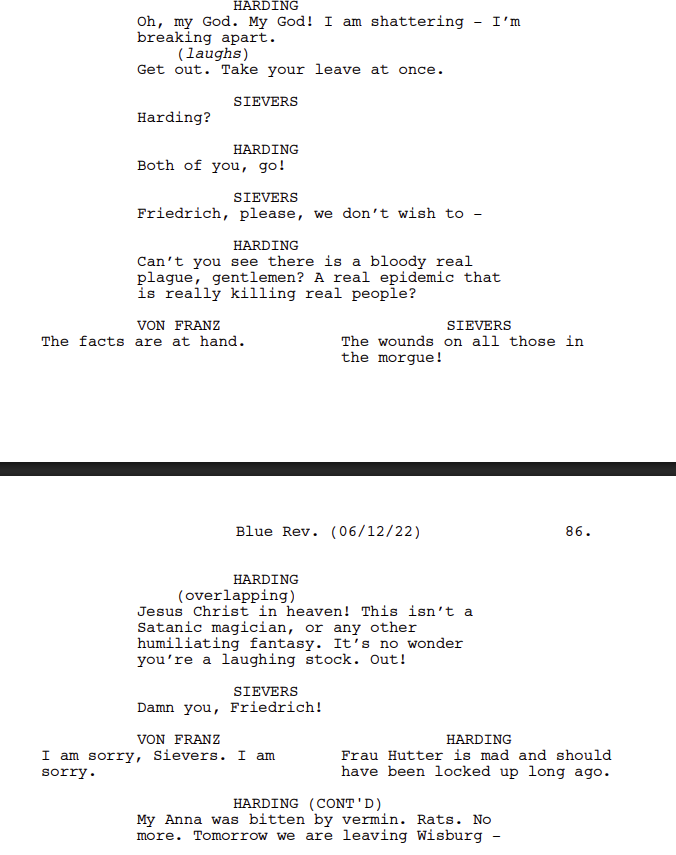
In the scene below, his rationalism comes through very strongly and clearly shows how opposed he is to Von Franz. He’s emotional, angry because his wife was attacked, and essentially done with Von Franz and Sievers's "fantasies".
It's personally one of my favorite scenes. I just appreciate the raw emotions that Aaron Taylor-Johnson adds to this conversation.
Thomas: A Bridge Between the Two Worlds
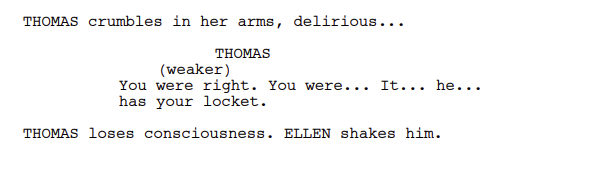
Thomas Hutter (Nicholas Hoult) begins closer to Harding’s worldview. At first, he struggles to understand Ellen’s fears and emotional connection to the supernatural. But unlike Harding, Thomas changes.
His journey is one of painful acceptance. Through his experiences with Orlok, he gradually realizes that the world cannot be understood through reason alone. By the end, he becomes someone capable of believing what once seemed impossible.
This arc makes Thomas a bridge between the rational and irrational sides of the story.
Count Orlok: Appetite and Instinct
Count Orlok represents pure appetite, instinct, decay, and animalistic desire.
Unlike the human characters, Orlok is not conflicted. He is hunger without restraint.
The screenplay presents him almost like a force of nature rather than a traditional villain. His presence strips rationality away, exposing the primal fears underneath human society.
This contrast between human order and animal instinct gives the story much of its psychological power.

3. Character Arcs
The screenplay also succeeds because its central characters genuinely change over the course of the story.
Ellen's Arc
Ellen’s journey is tragic but purposeful.
At first, she fears and resists Orlok. She sees him as a source of terror and corruption. But over time, she comes to understand that confronting him directly may be the only way to save Thomas and the people she loves.
Her final acceptance of Orlok becomes an act of sacrifice.
The script transforms Ellen from a victim into someone who actively chooses her fate.
Thomas's Arc
Thomas begins the story disconnected from Ellen’s fears and unable to fully understand her emotional reality.
His experiences gradually destroy his certainty about the world. By surviving Orlok’s castle and witnessing the horror firsthand, he moves from disbelief to belief.
This change is important because it gives emotional validation to Ellen’s perspective. Thomas finally sees what she had understood from the beginning.
Harding’s Small but Important Change
Although Harding does not undergo as dramatic a transformation, the screenplay still gives him a tiny shift near the end.
When Thomas shows him his wound, there is finally a glimmer of belief. For perhaps the first time, Harding recognizes that reality may contain things beyond rational explanation.
It is a small moment, but an effective one. The script suggests that even the most skeptical characters are eventually forced to confront the limits of reason.
Takeaway
The screenplay of Nosferatu works because it combines gothic horror with thematic storytelling.
Its foreshadowing creates a constant feeling of dread long before tragedy strikes. Its characters function as competing philosophies about emotion, reason, instinct, and belief. And its character arcs give the horror emotional meaning.
At its core, the script is about humanity confronting forces it cannot fully explain or control. The supernatural horror becomes a way of exploring fear, repression, desire, and sacrifice.
That balance between psychological depth and gothic terror is what gives the story its power.
Post a comment