A Month in Kyoto: Cultural Sensitivity as a Narrative Designer’s Responsibility
I speak multiple languages, which have always been my entry point into different cultures and ways of thinking.
As a narrative designer, this interest in languages comes with the following question: how does meaning change as it moves between cultures, and what responsibility does that place on storytellers, including narrative designers and game writers?
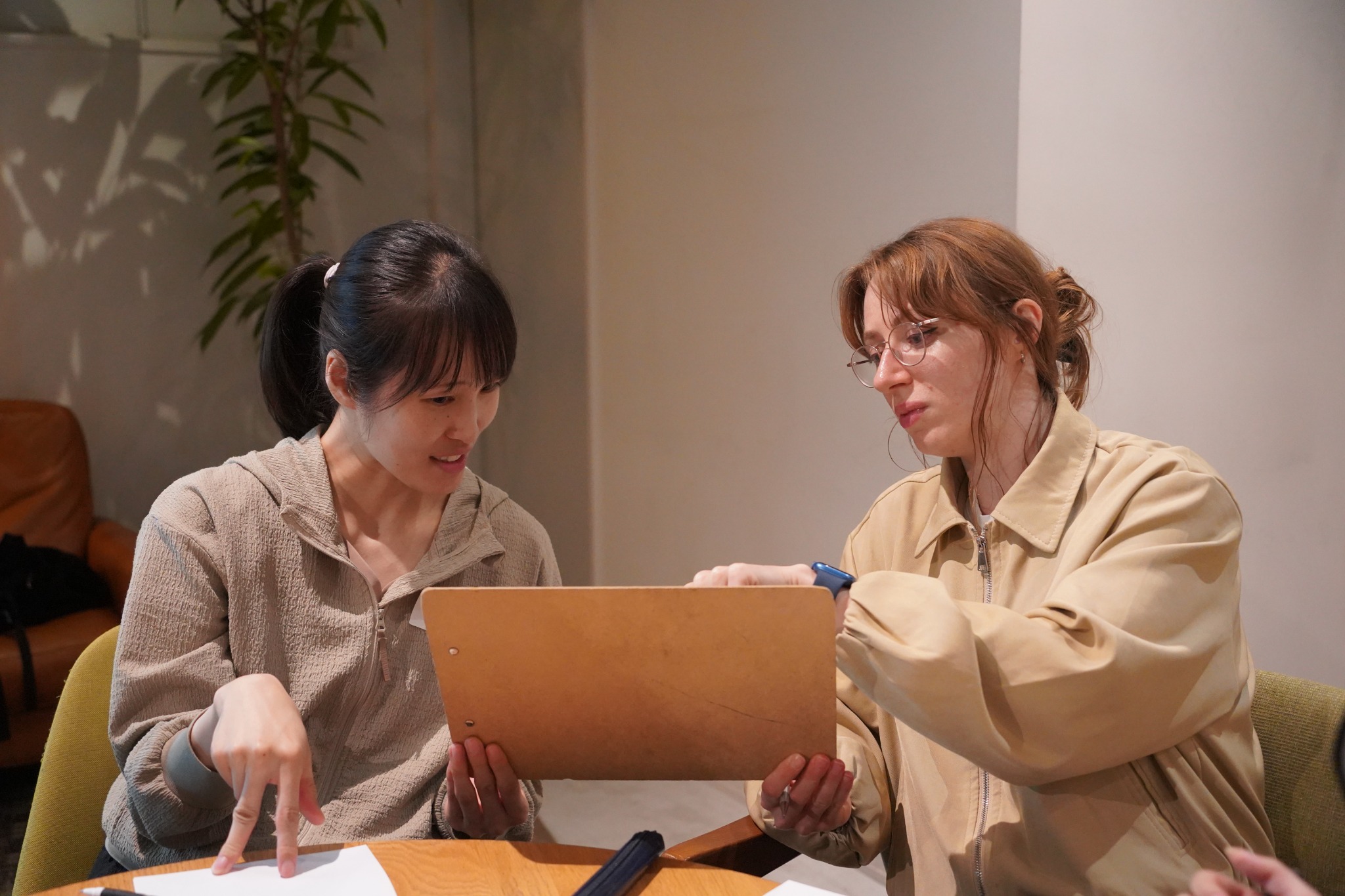
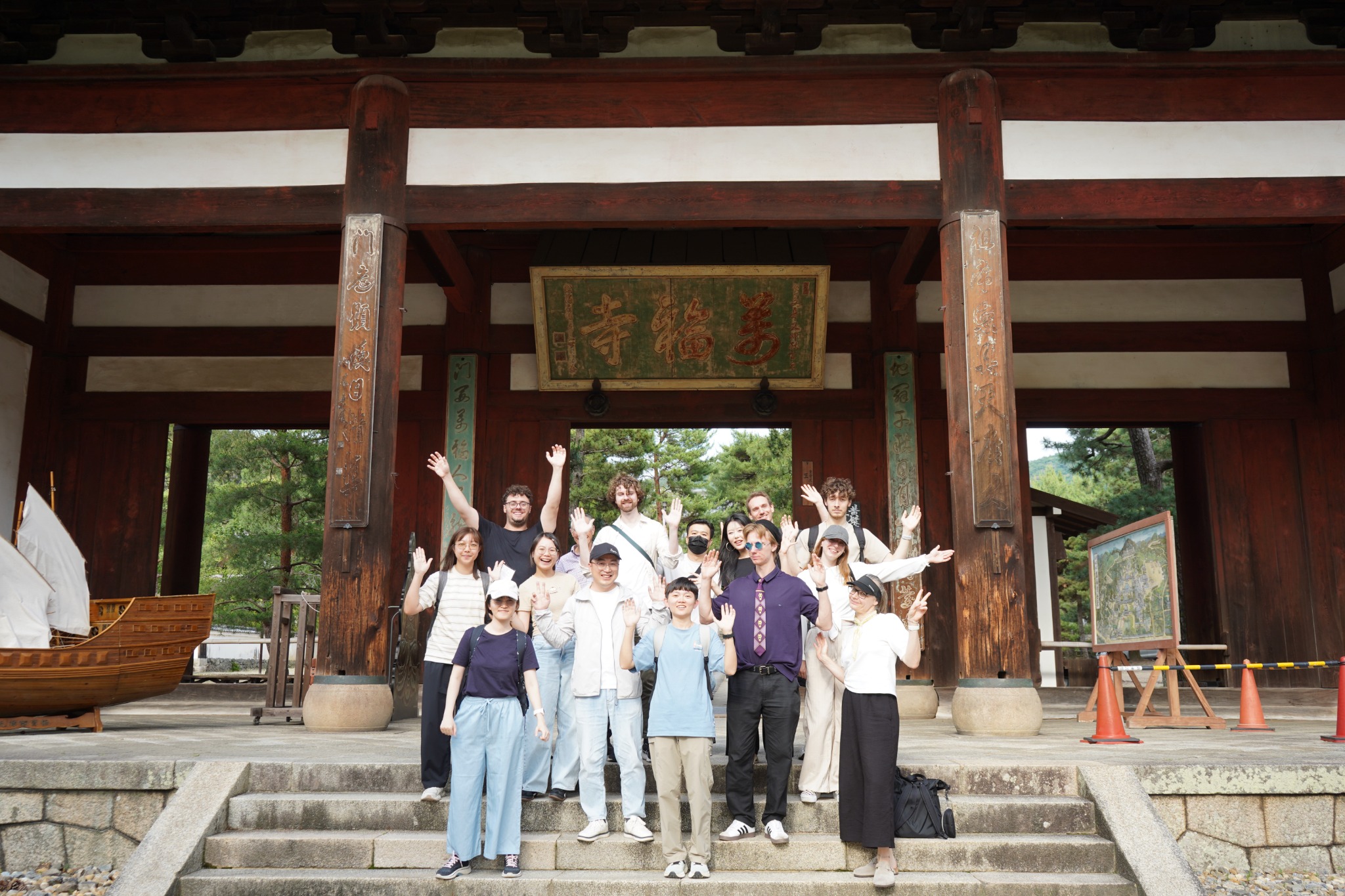
This June, I spent a month living in Kyoto, studying Japanese at JaLS, where I immersed myself both in the language and the culture around it. Each day began with intense language classes from 9:30 AM to 12:30 PM. Afternoons were devoted to various cultural activities and field trips that extended the learning beyond the classroom.
These activities included a wagashi (和菓子) workshop, where we learned to make traditional Japanese sweets, and a tea ceremony demonstration (茶道). Many activities also brought us into conversation with native Japanese speakers, which ensured full-day immersion in the language.
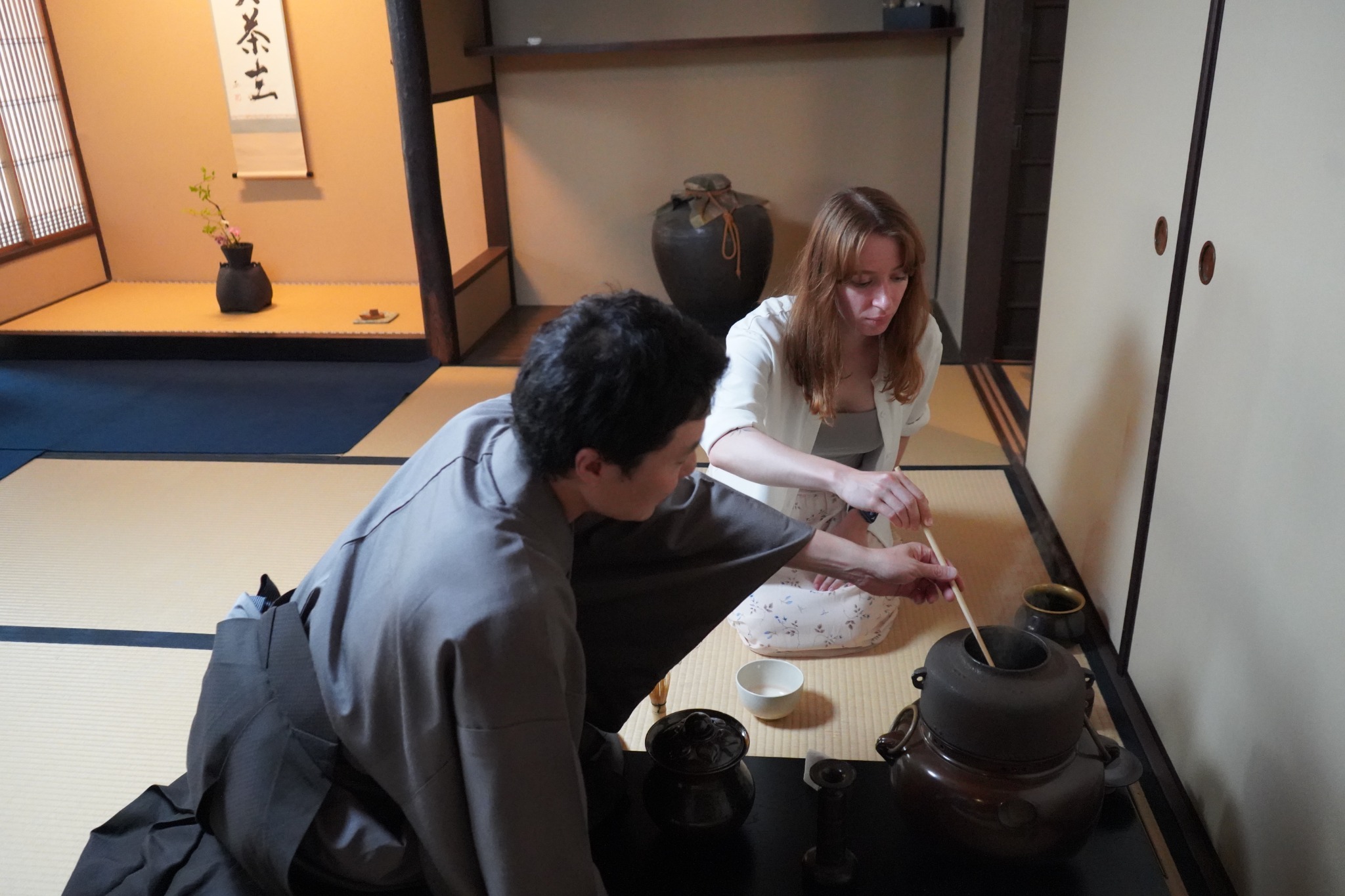
Together, these experiences helped me understand how the Japanese language takes on a new meaning when it's experienced within the culture that shaped it, rather than studied in isolation.
Kyoto also reinforced something I already considered fundamental to narrative design:
- First, that culture shapes how language, meaning, and stories are understood.
- And second, that cultural sensitivity is not an optional layer of production, but an absolutely essential part of how narrative meaning is created.
This article traces how my experience studying Japanese in Kyoto reinforced several ideas about language, culture, and narrative design. Along the way, I'll argue that cultural sensitivity is a fundamental narrative skill that shapes how stories create meaning for players.
To Learn a Language Is to Learn a Culture
A month in Kyoto improved my Japanese much more than I expected.
I remember my first day: jet-lagged, standing in a Starbucks, trying to order in Japanese with a very basic vocabulary. I didn’t really understand everything the barista was saying, but I nodded along anyway, hoping context would fill in the gaps. It didn’t fully, but somehow it worked out, and I eventually walked away with a matcha latte.
What I didn’t realize at the time was that I was relying less on language than on situational patterns I already knew from similar settings.
By the end of the month, things had changed so much that it still feels strange looking back. I was ordering comfortably in Japanese, actually understanding replies, and even having casual chats with the staff at Starbucks.
The difference was more than simply understanding new words; I had started to recognize the rhythms of how people speak in that context. The typical ways questions are asked, how responses are softened or shortened, and what is usually left unsaid because it’s implied by the situation.
For me, this experience didn’t introduce a new idea so much as reinforce something I’ve encountered while living in other countries and studying languages and cultures: culture is embedded in language and storytelling, and it’s easy to overlook when you only engage with it from the outside.
Beyond the Postcard Version of Kyoto
Living in Kyoto also emphasized how easily reality and representation can drift apart.
Places are often condensed into simplified, recognizable images that attempt to capture their cultural “essence”. Kyoto is repeatedly seen through images of temples, geishas, cherry blossoms, and an aesthetic harmony that can make the city feel almost dreamlike. These images are not wrong. The mountains surrounding the city, the shrines, the Zen gardens, and the narrow streets are genuinely striking in person.
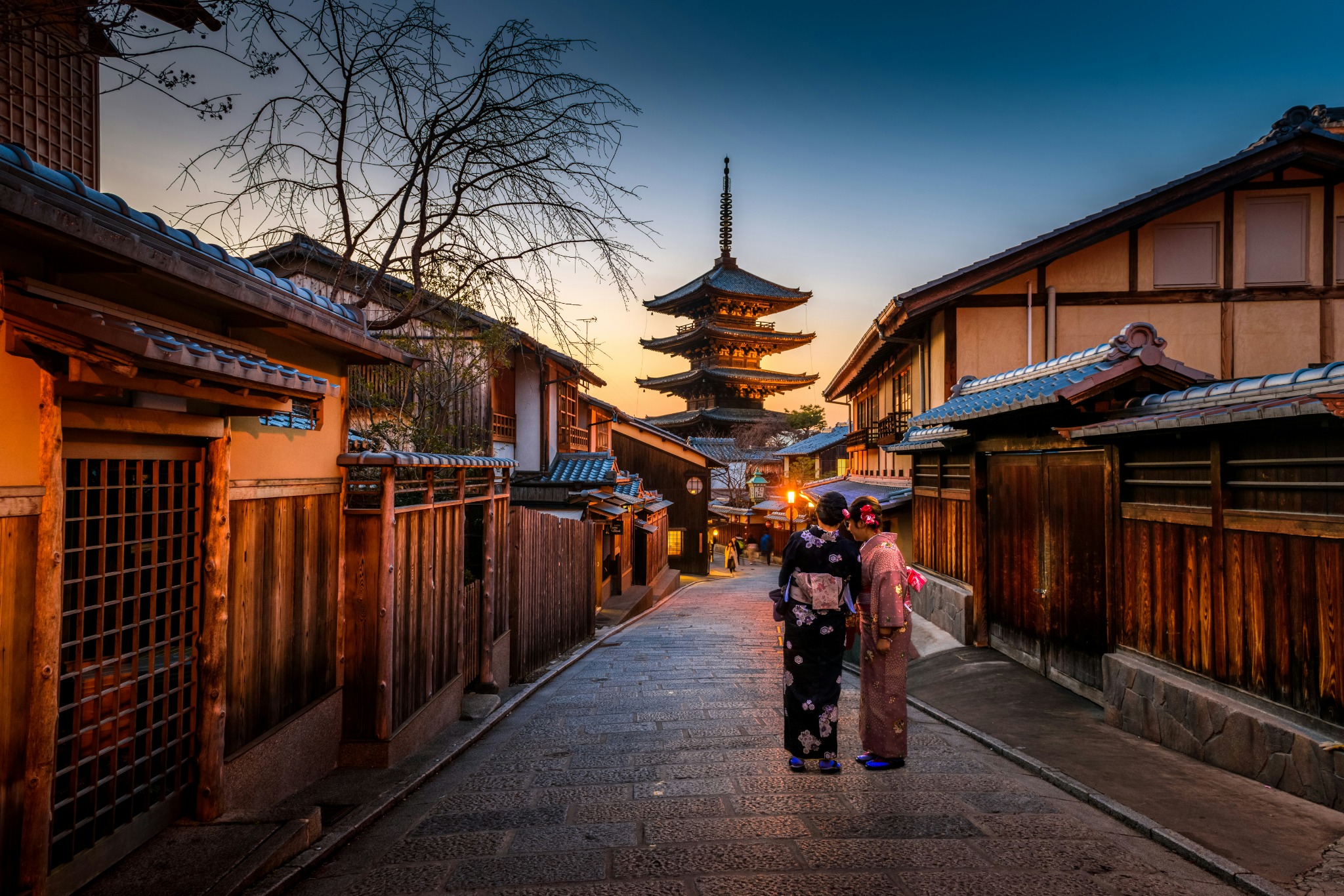
But living there, even for a short while, also meant seeing what exists outside those familiar cultural images. It meant noticing parts of Kyoto that rarely appear in travel writing or curated social media feeds.
One moment that stayed with me was seeing elderly people working in service jobs, or standing at bus stops in heavy rain helping tourists find the right bus. Before coming to Japan, I had mostly seen these kinds of scenes through stories celebrating older people who "keep working because they enjoy it," and how “wholesome” Japan is. But seeing them in person made that interpretation feel less complete. I found myself wondering about the economic realities behind what I was seeing.
I don't pretend that a month in Kyoto gave me insight into Japanese society as a whole. But it made me more cautious about drawing conclusions, and it changed my tolerance for simplistic narratives, whether idealized or critical.
Beneath the Surface of Words
Before studying Japanese at this level, I had often encountered descriptions of Japanese people as shy or reserved. Learning the language made it clear that this impression was incomplete, too.
In Japanese, communication often follows a different set of social conventions.
I started noticing that the core meaning of a sentence is often conveyed indirectly, especially when it comes to refusing or declining. For example, a refusal may not be communicated as a direct 「いいえ」(“no”), but instead as something a bit softer, like「ちょっと難しいかもしれません...」(“that might be a little difficult”).
So over time, what initially seemed like hesitation to express oneself began to read more as attentiveness. In many of the interactions I had, reducing friction in the conversation and maintaining flow seemed more important than directness itself.
These experiences, again, reinforced something I had already encountered in other languages as well: alongside being a tool for transmitting information, language is also a mirror of a culture’s social values. It carries ideas of what is considered polite, appropriate, or left unsaid.
Cultural Sensitivity in Narrative Design
Speaking in Japanese made every interaction an exercise in interpretation and humility. It emphasized how heavily communication depends on shared cultural assumptions; assumptions that usually remain invisible until you encounter someone who doesn’t share them.
This is also why cultural sensitivity matters so much to me as a narrative designer.
In game development, culture is often treated as surface decoration: an aesthetic layer, set of reference points, or a recognizable “flavor” applied to setting and character design.
But actually, it functions more like infrastructure, a system that shapes everything from how conflict in the story is structured, how authority between the characters is communicated, to how meaning between the player and the game space is transmitted.
My time in Kyoto made the implications of this idea harder to ignore. Working within another language made it yet again clear how often culture is reduced to surface aesthetics rather than understood as a system of meaning, and what is lost when those underlying structures are assumed and generalized rather than examined.
I have worked on projects where cultural representation was central to a story’s appeal, but where execution treated culture as an interchangeable texture. In some cases, Chinese temple architecture was used as a reference for environments intended to represent Japan, with different East Asian cultures treated as part of a generalized visual language rather than distinct systems.
In other cases, cultural presence was introduced primarily to signal diversity or visual distinctiveness, but relied on a narrow set of recognizable markers. Latin American-inspired settings, for example, could be reduced to surface imagery such as taco stands, without extending into a more structured or context-aware representation of the culture itself.
In all these projects, the key justification is that cultural accuracy does not matter “as long as it’s fun" or "as long as it looks pretty".
But that framing fails to see what is actually at stake.
When culture is treated as an interchangeable texture, the consequences of doing so extend far beyond the product’s design. Cultural traditions become detached from histories and the communities that gave them meaning. Living cultures are reduced to a collection of exotic symbols that can be mixed, repurposed, or discarded at will.
For players whose own backgrounds are being represented, this can mean seeing familiar customs, stories, or identities reduced to clichés or stripped of the context that makes them recognizable. For everyone else, these portrayals often become their primary point of reference, reinforcing simplified or misleading ideas about cultures they may never encounter firsthand.

The consequences are creative as well as cultural. When developers engage only with a culture's surface aesthetics, the result often feels generic: characters become archetypes and traditions become decorative motifs rather than forces that shape how people think and relate to one another. By overlooking the structures that give culture its meaning, representation loses both authenticity and narrative depth.
This is why cultural awareness is so essential in narrative design. When we introduce a specific culture into our game, we are borrowing aesthetics and working with systems of meaning that were not built in isolation, but shaped through decades of history and human contact. Bringing them into our work requires responsibility for how they are presented and the meanings they invite.
After all, stories are composed of both ideas and the conditions that make those ideas legible. But those conditions are never culturally neutral.
As narrative designers, we inevitably operate within cultural assumptions. Whether they are examined consciously or reproduced by default is what ultimately matters. Because the responsibility to examine them with sensitivity and care is inherent to the work itself.
Further Reading
If you want to read more about cultural (mis)representation in video games, here are some articles I recommend.
- On the image of Latin America in Tomb Raider.
- On cultural representation in games.
- On archeological ethics in Tomb Raider.
- On cultural responsibility in Indiana Jones: The Great Circle.
And there are many, many more. Just message me if you'd like additional ones! 🙂
Post a comment